
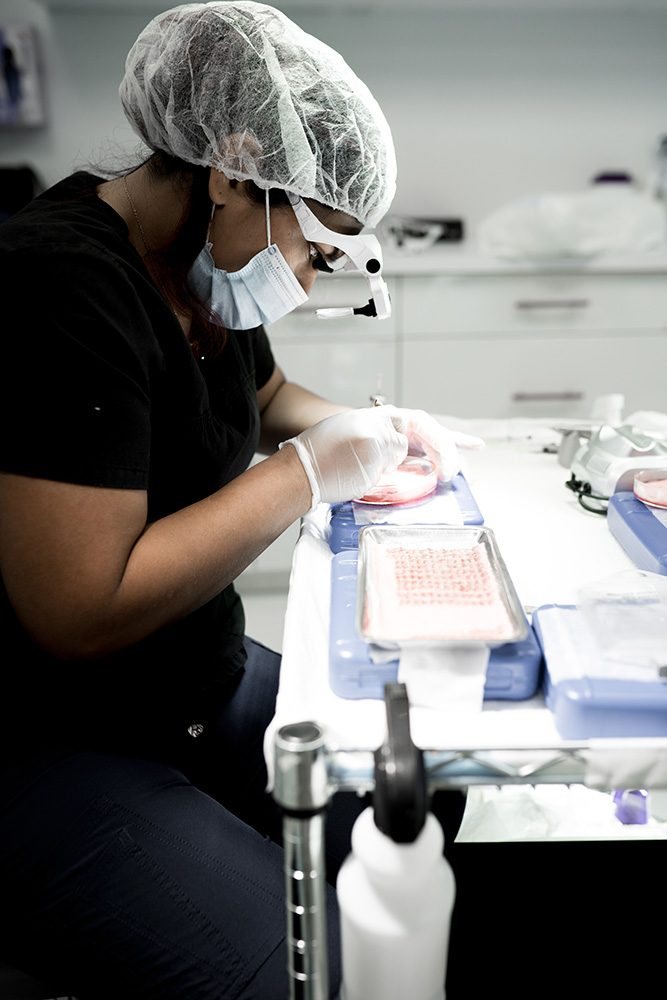


Noticing more scalp showing through your hair as the holidays approach? Whether you're dealing with a receding hairline, thinning at the crown, or an overall loss of density, fall can be a good time to understand your hair restoration options. At Eternal Hair & Esthetics in Totowa, New Jersey, patients can explore personalized hair transplant treatment using FUE and the clinic's proprietary DFI technique. While a transplant won't create instant holiday-ready hair, a complimentary consultation can help you begin a plan for lasting improvement.
Is a Hair Transplant an Option for Thinning Hair?
A hair transplant may help people with certain types of permanent hair loss, including male or female pattern hair loss. It works by moving healthy follicles from a donor area—typically the back or sides of the scalp—to areas where hair has become thinner.
But not all thinning hair is caused by the same condition. Some people experience hereditary hair loss, while others may have temporary shedding related to stress, illness, medication, or hormonal changes. The cause matters because a transplant is not the right solution for every type of hair loss.
At Eternal Hair & Esthetics, your hair restoration journey begins with a medical assessment of your scalp, donor hair, hair-loss pattern, and goals. This helps determine whether a hair transplant is appropriate and which approach may be suitable.
What Does Thinning Hair Look Like—and When Should You Pay Attention?
Thinning hair can develop gradually, which makes it easy to overlook until a holiday photo, bright bathroom lighting, or a familiar hairstyle reveals more scalp than before.
Common signs include:
A receding hairline or thinning temples
Reduced density across the top of the scalp
A visible crown or widening area of scalp
Hair that appears finer or less full than it used to
A part that looks wider over time
A gradual change in hair coverage in photographs
If your hair is thinning progressively, an evaluation can help identify whether you're experiencing pattern hair loss or another condition.
The American Academy of Dermatology explains that hair transplant candidates generally need adequate donor hair and a type of hair loss that can benefit from transplantation. Read more about hair transplant candidacy and treatment.
How Can FUE and DFI Help Restore Thinning Hair?
At Eternal Hair & Esthetics, hair restoration options include FUE and the clinic's proprietary DFI technique. Both involve moving individual follicular units, but the techniques differ in how follicles are harvested and implanted.
FUE Hair Transplant: Follicular Unit Extraction
FUE involves extracting individual follicular units from a donor area and placing them into areas affected by thinning or hair loss.
Eternal Hair & Esthetics offers advanced FUE, including its SmartGraft® system. FUE may be considered for hairline restoration, crown thinning, and other areas where appropriate donor follicles are available.
FUE does not create the long linear scar associated with strip harvesting, although small extraction scars may remain. The procedure and expected results depend on the patient's individual characteristics.
DFI Hair Transplant: Eternal's Proprietary Technique
DFI, or Direct Follicle Implantation, is Eternal Hair & Esthetics' proprietary implantation method. The clinic focuses on precise placement of follicles, with attention to angle, depth, and direction to support natural-looking growth.
The clinic reports a high graft viability rate for DFI. This is a clinic-reported claim, not a guarantee of an individual result. Patients should discuss how the rate is measured and what outcome may be realistic for their specific treatment plan.
Explore Eternal's DFI hair transplant technique or learn more about hair transplant services at Eternal Hair & Esthetics.
Can You Get a Hair Transplant Before the Holidays and See Results?
This is one of the most important questions for anyone considering hair restoration in November or December.
A hair transplant performed before the holidays will not usually produce a full head of new hair by the holiday season. Transplanted hairs commonly shed in the first few weeks, and new growth develops gradually over the following months.
Here's a general guide to what patients may experience:
Stage | What may happen |
Consultation | Scalp assessment, donor-area evaluation, treatment plan, and graft estimate |
First days | Healing, mild redness, swelling, or scabbing may occur |
First several weeks | Transplanted hairs may shed as part of the normal growth cycle |
Around 4–6 months | Early new growth may begin to become noticeable |
Around 8–12 months | Many patients see more meaningful visible improvement |
12–18 months | Further maturation and density may continue |
Individual timelines vary. Eternal's patient guidance explains that initial growth often appears around 8–12 months, with optimal full-density results commonly assessed at 12–18 months.
So, if you're hoping to look fuller-haired for a holiday gathering this year, the realistic benefit of starting now is beginning the process—not expecting immediate transformation.
Why Start Your Hair Restoration Journey at Eternal Hair & Esthetics This Fall?
Choosing a hair transplant is a personal decision. You deserve a medical team that takes the time to understand your hair loss and explain your options clearly.
At Eternal Hair & Esthetics, hair restoration is led by Dr. Tamir Tawfik, MD, Medical Director of Hair Restoration. The practice offers FUE, its proprietary DFI method, and personalized treatment planning based on each patient's hair-loss pattern and donor supply.
Patients can also benefit from:
Physician-led hair restoration: Treatment planning and medical leadership under Dr. Tawfik.
Specialized techniques: FUE, SmartGraft®, and Eternal's proprietary DFI method.
Individualized graft planning: A recommendation based on your scalp, donor area, and restoration goals.
Complimentary consultations: Available by video or in person.
A dedicated hair restoration facility: Located at 825 Riverview Drive, Floor 2, Totowa, NJ 07512.
If you're searching for a hair transplant consultation, Eternal offers a practical first step: understand your options, discuss your concerns, and get a personalized plan before deciding whether to proceed.
Learn more about Eternal Hair & Esthetics and its team.
What Should You Do Before Booking a Hair Transplant?
Before scheduling a procedure, make sure you understand the treatment plan and the expectations that come with it.
Use this checklist during your consultation:
Have I identified the likely cause of my thinning hair?
Do I understand whether I am a suitable hair transplant candidate?
Has my donor area been evaluated?
Do I know the recommended graft count and technique?
Have I discussed the total cost and financing options?
Do I understand recovery instructions and follow-up care?
Am I prepared for gradual results rather than instant fullness?
These questions can help you make a more informed decision and avoid choosing a procedure based only on price or timing. Rest assured, the team at Eternal Hair & Esthetics will conduct the right evaluation to make sure you are ready for your procedure.
Make This Fall the Start of Your Fuller-Hair Plan
Thinning hair doesn't have to remain something you hide in photographs or worry about before every holiday event. If you've noticed a receding hairline, crown thinning, or a gradual loss of density, now is a good time to learn what may be causing it.
At Eternal Hair & Esthetics, you can discuss FUE, DFI, and other hair restoration options with a physician-led team in Totowa, New Jersey.
Book a complimentary video or in-person consultation with Eternal Hair & Esthetics to discuss your hair-loss pattern, personalized treatment options, and a realistic timeline for results.
People Also Ask
Can a hair transplant help thinning hair?
A hair transplant may help certain types of permanent hair loss, including male and female pattern hair loss. It moves healthy follicles from a donor area to areas with reduced density. However, temporary shedding or some scalp conditions may require a different treatment. A medical assessment helps determine whether transplantation is appropriate.
How many grafts are needed for thinning hair?
The number of grafts depends on the size of the thinning area, the hair-loss pattern, donor hair density, and the desired coverage. A small hairline area may require fewer grafts than extensive top or crown thinning. Eternal Hair & Esthetics evaluates these factors during a personalized consultation.
Is FUE good for thinning hair?
FUE can be an option for suitable patients with thinning hair caused by pattern hair loss. It involves harvesting individual follicular units and transplanting them into areas of reduced density. The outcome depends on donor supply, treatment planning, and the patient's characteristics. A consultation helps determine whether FUE is suitable.
What is DFI hair restoration?
DFI stands for Direct Follicle Implantation, Eternal Hair & Esthetics' proprietary implantation method. The clinic emphasizes careful placement of follicles at appropriate angles, depths, and directions to support natural-looking growth. Patients can discuss whether DFI or FUE better fits their hair-loss pattern and goals.
How long does a hair transplant take to show results?
Hair transplant results develop gradually. Transplanted hairs often shed during the first weeks, and early new growth may appear over the following months. Many patients see more meaningful improvement around 8–12 months, while further maturation may continue up to 12–18 months.
FAQs
Can women get hair transplants for thinning hair?
Yes, some women with suitable types of hair loss may be candidates for hair transplantation. However, female hair thinning can have several causes, including hormonal changes, hereditary hair loss, and temporary shedding. A careful evaluation is important to determine whether a transplant or another treatment is more appropriate.
Does a hair transplant stop future hair loss?
A hair transplant moves follicles into areas affected by thinning, but it does not necessarily stop the progression of hair loss in untreated areas. Some patients may need ongoing medical management or monitoring. Discuss long-term planning with your medical team so the restoration design accounts for possible future changes.
Is hair transplant recovery difficult?
Recovery varies by procedure and individual. Patients may experience temporary redness, swelling, scabbing, or tenderness. The transplanted area needs careful handling during early healing, and activity restrictions may apply. Follow the specific aftercare instructions provided by Eternal Hair & Esthetics.
Can I get a hair transplant consultation online?
Yes. Eternal Hair & Esthetics offers complimentary consultations by video or in person. A virtual consultation can be a convenient way to discuss your concerns, learn about FUE and DFI, and understand the next steps. A clinical assessment may still be needed to confirm candidacy and finalize a treatment plan.